




Good vs. Bad Gas Generator Installations: Why the Details Matter
Installing a natural gas or propane generator is a complex process that extends far beyond placing equipment on a pad. The quality of the gas installation directly dictates the performance, safety, and reliability of your system. Whether you are protecting a healthcare facility, a commercial building, or a manufacturing plant, a high-quality installation is the primary defense against costly downtime.
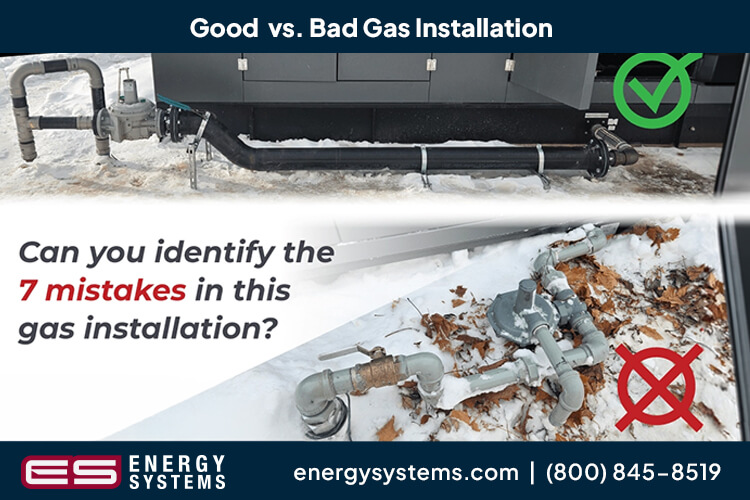
Characteristics of a Reliable Gas Installation
A superior installation adheres strictly to manufacturer requirements, local codes, and industry best practices. For Generac generators, this ensures the unit receives consistent fuel delivery under full load without restriction.
Key traits include:
- Correct Pipe Sizing: Piping is sized based on BTU demand, distance from the meter, number of bends, and expected load conditions.
- Proper Pressure & Regulation: Fuel pressure is verified under load, and regulators are staged to maintain stable flow during startup and peak demand.
- Code Compliance: Installations meet all local and national fuel gas codes, including the installation of shutoff valves, sediment traps, and proper venting.
- Thoughtful Routing & Support: Gas lines are routed to minimize pressure loss, protected from physical damage, and securely supported to prevent vibration-related failures.
- Comprehensive Commissioning: The generator undergoes load-testing to confirm fuel delivery under real operating conditions rather than a simple idle check.
Common Risks of Poor Gas Installations
A sub-par installation may appear functional during an initial startup but often fails when the generator is placed under maximum load during an emergency. Red flags include:
- Undersized Gas Lines: Causes hard starts, low power output, and potential nuisance shutdowns.
- Skipping Load Tests: Failure to identify pressure drops that occur when the generator ramps up.
- Improper Regulator Placement: Leads to inconsistent fuel delivery and engine performance degradation.
- Non-Code-Compliant Fittings: Missing shutoff valves or improper routing creates significant safety hazards and may lead to inspection failures.
Technical Checklist: 7 Common Installation Issues
To ensure long-term reliability, avoid these seven frequent errors identified in poor installations:
|
Issue |
Impact on System |
|---|---|
|
Regulator Proximity |
Regulator installed too close to the generator risks failure from heat and vibration. |
|
Venting Failures |
Failure to mount regulators high enough or extend vent lines can lead to pressure issues from snow or debris. |
|
Excessive Elbows |
Too many 90-degree elbows add resistance, reducing gas flow and pressure. |
|
Missing Drip Legs |
Lack of sediment traps allows moisture and contaminants to damage internal components. |
|
Under-sized Piping |
Failure to oversize pipes prevents the generator from receiving adequate fuel during peak demand. |
|
Lack of Supports |
Unsupported piping sags and stresses fittings over time, causing potential leaks. |
|
No Flexible Line |
Lack of a flexible fuel line leads to cracked fittings due to engine vibration. |
Partnering with Energy Systems
A generator’s reliability is limited by the system supporting it. Shortcuts in gas installation lead to increased repair costs, safety risks, and operational downtime. At Energy Systems, our power experts understand the precise fuel requirements of Generac generators, local code standards, and real-world operating conditions. We support facilities across an extensive service area that spans multiple regions of the United States.
To see if your project falls within our service footprint, please refer to our coverage map. For expert assistance with your gas generator installation, contact the Energy Systems Power Systems Team at 1-800-845-8519.
Frequently Asked Questions (FAQ)
Why is it important to oversize gas piping?
Oversizing compensates for long runs, fittings, and peak demand. A line sized "just right" on paper often starves the generator of fuel during critical startup or full-load scenarios.
Why must I use a flexible fuel line?
A flexible line is required to absorb vibration and movement between the generator and the rigid gas piping. Without it, vibration can loosen or crack fittings, resulting in dangerous leaks.
Who can I call to ensure my gas installation is code-compliant?
For professional guidance on installation, commissioning, and code compliance, contact the Energy Systems Power Systems Team at 1-800-845-8519.