




How to Size a Generator for New Construction
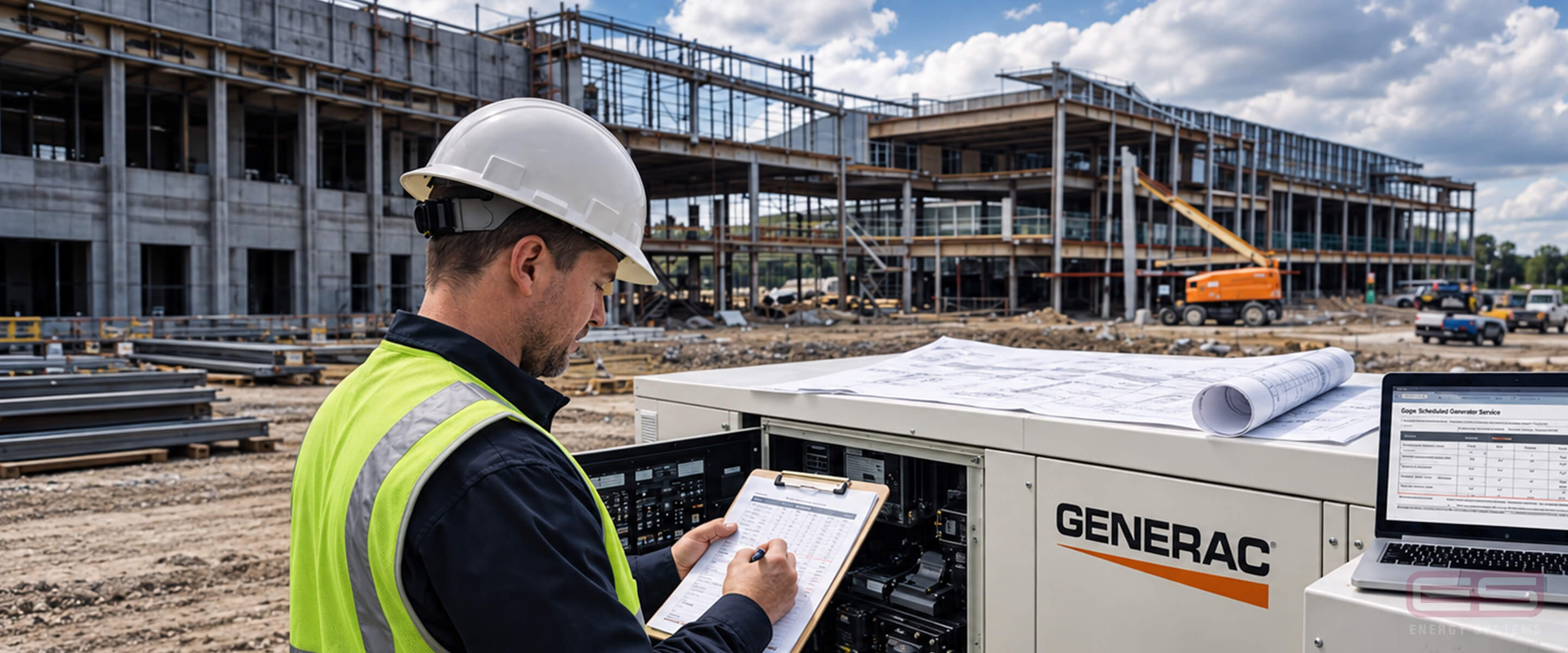
Sizing a backup generator for new construction is one of the most critical decisions you'll make during the design phase. Get it right, and you have reliable power protection for decades. Get it wrong, and you face expensive replacement, system failure when you need it most, or wasted money on excessive capacity.
This guide walks you through the complete generator sizing process using professional engineering methodology. Whether you're a facility manager, project engineer, architect, or building owner, you'll understand exactly how to determine the correct generator size for your new commercial building.
By the end of this guide, you'll know:
- How professional load calculations are performed
- What the electrical codes require
- Common sizing mistakes and how to avoid them
- How to optimize costs without compromising reliability
Why Proper Generator Sizing Matters
The Consequences of Incorrect Sizing
Undersized Generators:
When a generator is too small for the connected load:
- System failure under load - Generator cannot carry the building's electrical demand
- Overload trips - Protective devices shut down power entirely
- Voltage sag - Equipment may malfunction or be damaged
- Overheating - Generator runs above rated capacity, reducing lifespan
- Compliance violations - Code requirements not met
- Voided warranties - Operation beyond rated capacity voids manufacturer warranties
The most critical failure: During an emergency when you need backup power most, an undersized generator fails to operate properly or shuts down completely.
Oversized Generators:
While less catastrophic than undersizing, excessive capacity creates problems:
- Higher initial cost - Larger generators cost significantly more
- Fuel inefficiency - Generators running at <30% capacity waste fuel
- Wet stacking - Light loads cause unburned fuel accumulation in diesel engines
- Increased maintenance - Larger systems cost more to maintain
- Space requirements - Bigger generators need more room and larger pads
- Unnecessary complexity - Parallel systems when single unit would suffice
The financial impact: Oversizing by 50% can add $30,000-$100,000+ to project costs depending on system size, with no operational benefit.
The Right-Sizing Goal
Professional generator sizing aims for:
- 100% of critical load capacity at rated output
- 20-30% future growth margin for equipment additions
- Proper motor starting capacity without voltage sag
- Efficient operating range (40-80% load typical)
- Code compliance for all applicable standards
- Optimized first cost without compromising reliability
Understanding Load Types and Calculations
Connected Load vs. Demand Load
Connected Load:
The total nameplate rating of all electrical equipment that could potentially operate simultaneously.
Example:
- HVAC: 200 kW
- Lighting: 50 kW
- Receptacles: 30 kW
- Elevators: 40 kW
- Process equipment: 80 kW
- Total connected: 400 kW
Demand Load:
The actual maximum electrical demand considering diversity (not everything runs simultaneously at full capacity).
Same example with diversity factors:
- HVAC: 200 kW × 0.85 = 170 kW
- Lighting: 50 kW × 0.75 = 37.5 kW
- Receptacles: 30 kW × 0.50 = 15 kW
- Elevators: 40 kW × 0.60 = 24 kW
- Process equipment: 80 kW × 0.90 = 72 kW
- Total demand: 318.5 kW
Critical distinction: Sizing to connected load (400 kW) wastes money. Sizing to demand load (318.5 kW) is appropriate, but you must use verified diversity factors, not guesses.
Critical vs. Non-Critical Loads
Critical Loads (Must operate during outage):
- Life safety systems (emergency lighting, exit signs, fire alarm)
- Essential equipment (servers, critical manufacturing, medical equipment)
- HVAC for critical areas (server rooms, cleanrooms, operating rooms)
- Security and communications systems
- Fire pumps and sprinkler systems
- Elevator recall (at least one elevator)
Non-Critical Loads (Can be shed during outage):
- General office lighting (beyond egress)
- Comfort HVAC for non-critical areas
- Convenience receptacles
- Non-essential equipment
- Electric water heaters
- Most kitchen equipment
Sizing approach: Generator only needs to supply critical loads. Proper load shedding can reduce required generator size by 30-50% compared to serving entire building.
The Professional Load Calculation Process
Step 1: Inventory All Critical Equipment
Create comprehensive list including:
For each piece of equipment, document:
- Equipment description and location
- Nameplate rating (kW or HP)
- Voltage and phase (120V, 208V, 480V, 3-phase, etc.)
- Power factor (if known, otherwise assume 0.8-0.85)
- Starting method (across-the-line, soft-start, VFD)
- Operating hours and duty cycle
- Criticality (must-run vs. nice-to-have)
Data sources:
- Electrical drawings and schedules
- Equipment submittal data
- Manufacturer specifications
- Existing building data (for renovations)
- Owner's operational requirements
Common mistake: Using estimated loads instead of actual nameplate data. This introduces 20-40% error in either direction.
Step 2: Calculate Running Load
Basic calculation formula:
For resistive loads (heating, lighting):
For motor loads (HVAC, pumps, fans):
Standard assumptions when data unavailable:
- Motor efficiency: 0.85-0.92 (depending on size and age)
- Power factor: 0.80-0.85 (uncorrected)
Example - 50 HP motor:
Sum all running loads for total steady-state demand.
Step 3: Calculate Motor Starting Loads
Why motor starting matters:
Electric motors draw 3-6 times their running current when starting (called "locked rotor" or "inrush" current). This surge lasts only 1-10 seconds but can:
- Cause voltage sag affecting other equipment
- Trip generator overload protection
- Damage motor contactors and starters
- Create nuisance problems for sensitive electronics
Starting current multipliers by motor type:
Across-the-Line Starting (Direct Online):
- Small motors (<5 HP): 4-5× running current
- Medium motors (5-50 HP): 5-6× running current
- Large motors (>50 HP): 6-7× running current
Soft-Start or Reduced Voltage:
- 2-3× running current (reduced inrush)
Variable Frequency Drives (VFD):
- 1-1.5× running current (minimal inrush)
Critical calculation:
You must size generator to handle:
- All running loads PLUS
- Starting current of largest motor PLUS
- 25% margin for voltage regulation
Example calculation:
Building loads:
- Steady-state running: 250 kW
- Largest motor: 75 HP (56 kW running)
- Starting method: Across-the-line
- Starting multiplier: 6×
Starting kVA calculation:
Total generator requirement during motor start:
Recommended generator size: 600-650 kW (includes 25% starting margin)
If same motor had VFD:
Starting requirement would be ~66 kVA instead of 395 kVA, allowing much smaller generator (300-350 kW range).
Step 4: Apply Diversity Factors
Diversity factors account for:
- Not all equipment operates simultaneously
- Some loads cycle on/off
- Partial loading of equipment
- Time-of-day variations
National Electrical Code (NEC) provides diversity factors for certain load types, but these are minimum requirements. Professional engineering judgment required.
Typical diversity factors:
Lighting:
- Office: 0.75-0.85
- Warehouse: 0.80-0.90
- Retail: 0.90-1.00 (most lights on)
Receptacle Loads:
- Office: 0.40-0.60
- Industrial: 0.50-0.70
- Laboratory: 0.60-0.80
HVAC:
- Cooling: 0.85-0.95 (most units run)
- Heating: 0.70-0.85 (staging)
- Ventilation: 0.90-1.00 (continuous)
Important: Conservative approach uses higher diversity factors (closer to 1.00) for critical facilities. Liberal approach uses lower factors but increases risk of undersizing.
Step 5: Add Future Growth Allowance
Industry standard: 20-30% capacity margin for future additions.
Why growth allowance matters:
- Buildings add equipment over 20-30 year generator lifespan
- Technology changes (more servers, electric vehicles, etc.)
- Tenant improvements may increase loads
- Regulatory changes may require additional systems
Example:
- Calculated current demand: 400 kW
- Growth allowance (25%): 100 kW
- Recommended generator size: 500 kW
Cost-benefit consideration:
- Adding 100 kW capacity now: +$15,000-25,000
- Replacing entire generator later: $100,000-150,000
Growth allowance is cost-effective insurance.
Code Requirements for Generator Sizing
National Electrical Code (NEC)
Article 700 - Emergency Systems:
For legally required emergency systems (life safety):
- Generator must supply 100% of emergency load
- No diversity factors allowed for emergency loads
- Capacity verification required through engineering analysis
- Must handle all emergency loads simultaneously
Article 701 - Legally Required Standby Systems:
For systems required by code but not immediate life safety:
- Generator must supply 100% of legally required loads
- Limited diversity may be acceptable with engineering justification
- Load management systems may be used
Article 702 - Optional Standby Systems:
For non-required backup power:
- No specific sizing requirements
- Engineering discretion
- Load management and prioritization acceptable
NFPA 110 - Emergency Power Systems
Applies to: Healthcare, high-rise buildings, facilities with emergency power requirements
Key sizing requirements:
Capacity Rating:
- Generator must be rated for 100% of emergency plus legally required standby loads
- No overloading allowed even temporarily
- Must operate continuously at rated load
Voltage Regulation:
- ±10% of nominal voltage under all loading conditions
- Starting large motors must not cause excessive voltage sag
- Frequency regulation ±5% under all conditions
Ambient Conditions:
- Generator rated capacity at site altitude and temperature
- Derating required for high altitude (3.5% per 1,000 feet above sea level)
- Derating required for high temperatures (typically derated above 77°F)
our service area considerations:
- Altitude derating usually minimal (below 1,500 feet elevation)
- Temperature rating must consider summer highs (90-95°F)
- Cold weather packages required for reliable winter starting
IEEE Standards
IEEE 446 (Orange Book) - Emergency and Standby Power Systems:
Recommended practices include:
- Detailed load calculation methodology
- Motor starting analysis
- System one-line diagrams
- Coordination studies
- Testing and commissioning procedures
Professional engineers reference IEEE 446 for best practices beyond code minimums.
Common Generator Sizing Mistakes
Mistake #1: Using Rules of Thumb
Wrong approach:
"We have a 50,000 square foot building, so we need 500 kW (10 watts/square foot)."
Why it's wrong:
- Building types vary dramatically in load density
- Office: 5-8 W/sq ft
- Warehouse: 2-4 W/sq ft
- Data center: 50-200+ W/sq ft
- Manufacturing: 10-50+ W/sq ft
Rule of thumb error margin: 50-200% in either direction
Correct approach: Actual load calculation based on installed equipment.
Mistake #2: Ignoring Motor Starting
Wrong assumption:
"We have 300 kW of connected load, so a 350 kW generator is fine."
Why it fails:
If you have large motors with across-the-line starting, you may need 500-600 kW generator to handle starting surge without voltage sag or shutdown.
Correct approach: Calculate starting kVA for all motors, size generator accordingly, or specify soft-starters/VFDs to reduce starting load.
Mistake #3: No Growth Allowance
Short-sighted thinking:
"We'll size it exactly for current needs and save money."
Five years later:
- Building adds 10 computer servers
- HVAC system upgraded
- Security system expanded
- EV charging stations added
- Generator now undersized
Replacement cost: $150,000+ vs. $20,000 to add capacity during initial installation
Correct approach: Plan for 20-30% growth from day one.
Mistake #4: Forgetting Altitude/Temperature Derating
Scenario:
Building is at 5,000 feet elevation in Colorado. Engineer sizes 500 kW generator based on load calculations.
Reality:
Generator derated 17.5% at altitude (3.5% per 1,000 ft)
- Actual capacity: 500 × 0.825 = 412.5 kW
- Now undersized for 500 kW load
Correct approach: Account for site conditions. Order 600 kW generator to achieve 500 kW capacity at altitude.
our service area advantage: Low altitude minimizes this concern, but summer temperatures still require consideration.
Mistake #5: Single-Phase vs. Three-Phase Confusion
Common error:
- Building has 480V 3-phase electrical service
- Total load: 300 kW across all three phases
- Engineer specifies 300 kW generator
- Generator is single-phase or load is unbalanced
Problem:
If load is unevenly distributed across phases, one phase may be overloaded even if total is within capacity.
Example:
- Phase A: 150 kW
- Phase B: 100 kW
- Phase C: 50 kW
- Total: 300 kW, but Phase A exceeds single-phase capacity
Correct approach: Balance loads across phases or size generator for maximum single-phase load.
Mistake #6: Fuel Type Selection Without Analysis
Diesel vs. Natural Gas decision made on:
- Personal preference
- "We've always used diesel"
- First cost only
Better analysis considers:
Diesel advantages:
- Independent fuel supply (on-site storage)
- Higher energy density
- Better performance at low temperatures
- Lower installation cost (no gas service required)
Diesel disadvantages:
- Fuel degradation (requires testing/polishing)
- On-site fuel storage regulations
- Higher maintenance cost
- Emissions considerations
Natural Gas advantages:
- No fuel storage required
- No fuel degradation issues
- Lower emissions
- Lower maintenance costs
- Unlimited runtime (assuming gas supply)
Natural Gas disadvantages:
- Depends on utility gas supply (may fail during disaster)
- Gas service upgrade may be expensive
- Lower power density (larger engine for same output)
- Cold weather performance challenges
Correct approach: Analyze both options with total lifecycle costs, reliability requirements, and site constraints.
Get professional load calculations from our generator experts. We'll analyze your electrical drawings, calculate exact requirements, and recommend the right-sized system.
Free sizing consultation: (800) 845-8519
Step-by-Step Generator Sizing Process
For Building Owners and Project Managers
Phase 1: Define Requirements (Design Development)
Timeline: During architectural/engineering design phase
Actions:
- Identify which building systems must operate during outage
- Determine critical vs. non-critical loads
- Establish code requirements (NFPA 110, NEC, local codes)
- Consider future growth and expansion plans
- Set budget parameters
Deliverable: Load criteria document for electrical engineer
Phase 2: Load Calculations (Construction Documents)
Timeline: During electrical design
Actions:
- Engineer performs detailed load calculations
- Motor starting analysis completed
- Generator size determined
- Transfer switch sizing specified
- Fuel system capacity calculated
- One-line diagram prepared
Deliverable: Generator specifications in construction drawings
Phase 3: Equipment Selection (Bidding/Procurement)
Timeline: During contractor selection
Actions:
- Review contractor proposals for compliance
- Verify generator manufacturers and models meet specifications
- Confirm sizing calculations
- Review value engineering proposals carefully
- Award contract
Deliverable: Generator purchase order
Phase 4: Installation (Construction)
Timeline: During building construction
Actions:
- Coordinate generator delivery and placement
- Verify installation per drawings
- Ensure proper connections and grounding
- Coordinate utility services (gas, if applicable)
- Witness factory start-up
Deliverable: Installed, operational generator system
Phase 5: Commissioning (Startup)
Timeline: Before building occupancy
Actions:
- Perform no-load testing
- Conduct load bank testing at 25%, 50%, 75%, 100% capacity
- Verify automatic transfer switch operation
- Test under actual building load
- Document all test results
- Train facility staff
Deliverable: Commissioned system ready for service
Generator Sizing Examples by Building Type
Small Office Building (10,000 sq ft)
Critical loads:
- Emergency lighting: 5 kW
- HVAC for server room: 15 kW
- IT equipment: 20 kW
- Security system: 2 kW
- Essential receptacles: 10 kW
- Running load total: 52 kW
Largest motor: 7.5 HP HVAC fan (across-the-line start)
Starting calculation:
- 7.5 HP = 5.6 kW running = 6.6 kVA
- Starting: 6.6 × 5 = 33 kVA
- Total peak: 52 kW + 33 kVA ≈ 85 kW equivalent
With growth allowance (25%):
- 85 × 1.25 = 106 kW
Recommended generator: 100-125 kW natural gas or diesel
Typical cost: $45,000-$65,000 installed
Medical Office Building (30,000 sq ft)
Critical loads:
- Emergency and egress lighting: 15 kW
- HVAC for patient areas: 80 kW
- Medical equipment: 40 kW
- X-ray (if applicable): 30 kW (high starting load)
- Elevators (1 for accessibility): 25 kW
- Security and fire alarm: 5 kW
- IT and communications: 15 kW
- Essential receptacles: 20 kW
- Running load total: 230 kW
Largest motor: 40 HP chiller (soft-start equipped)
Starting calculation:
- 40 HP = 30 kW running = 35 kVA
- Soft-start: 35 × 2.5 = 88 kVA
- Total peak: 230 kW + 88 kVA ≈ 310 kW equivalent
With growth allowance (25%):
- 310 × 1.25 = 388 kW
Recommended generator: 400-450 kW
Typical cost: $125,000-$175,000 installed
Special considerations:
- May require NFPA 110 Level 2 compliance
- X-ray startup creates significant load
- Patient care areas must maintain HVAC
- Elevator required for accessibility
Manufacturing Facility (100,000 sq ft)
Critical loads:
- Emergency lighting: 25 kW
- Process HVAC: 200 kW
- Critical production equipment: 300 kW
- Material handling: 100 kW
- Compressed air: 75 kW
- Process cooling: 150 kW
- Control systems: 30 kW
- Security and communications: 10 kW
- Running load total: 890 kW
Largest motor: 200 HP process equipment (VFD controlled)
Starting calculation:
- 200 HP = 149 kW = 175 kVA
- VFD start: 175 × 1.3 = 228 kVA
- Total peak: 890 kW + 228 kVA ≈ 1,110 kW equivalent
With growth allowance (20%):
- 1,110 × 1.20 = 1,332 kW
Recommended generator: 1,400-1,500 kW (or two 750 kW in parallel)
Typical cost: $450,000-$650,000 installed
Special considerations:
- May require multiple generators for reliability/redundancy
- Sequential motor starting to reduce peak demand
- Load management system to prioritize equipment
- Natural gas preferred for unlimited runtime
Cost Optimization Strategies
Strategy 1: Load Management Systems
Concept: Automatically shed non-critical loads when operating on generator power.
Example:
- Total building load: 600 kW
- Critical loads only: 400 kW
- Load management sheds 200 kW of non-critical loads automatically
Result:
- Can install 450 kW generator instead of 650 kW
- Savings: $50,000-$75,000
- Load management system cost: $15,000-$25,000
- Net savings: $25,000-$60,000
Strategy 2: Soft-Starters or VFDs
Concept: Reduce motor starting loads to allow smaller generator.
Example:
- 100 HP motor: Across-the-line start requires 400 kVA starting capacity
- Same motor with soft-start: 160 kVA starting capacity
- Reduction: 240 kVA (allows smaller generator)
Cost analysis:
- Soft-starter: $3,000-$8,000
- Generator size reduction: 50 kW
- Savings: $10,000-$20,000
- Net savings: $2,000-$17,000 per large motor
Strategy 3: Phased Approach
Concept: Install generator sized for current needs plus growth capacity. Add second generator later if needed.
Example:
- Current load: 500 kW
- Future expansion: +300 kW
- Option A: Install 1,000 kW now ($350,000)
- Option B: Install 650 kW now ($225,000), add 400 kW later ($140,000 = $365,000 total)
Analysis:
- Option B costs $15,000 more long-term
- But delays $140,000 expense by 5-10 years
- Present value savings significant
- Reduces risk if expansion doesn't happen
Strategy 4: Right-Sizing vs. Over-Sizing
Common pressure: "Let's go bigger to be safe."
Better approach: Proper engineering eliminates guesswork.
Example:
- Properly calculated requirement: 400 kW
- "Safe" oversizing to 600 kW
- Cost difference: $80,000
- Operational issues: Wet stacking, fuel waste, higher maintenance
Correct sizing with 25% growth margin:
- 400 × 1.25 = 500 kW
- Adequate capacity, optimized cost
- Proper loading prevents wet stacking
Working with Engineers and Contractors
What to Expect from Your Electrical Engineer
During design phase, engineer should provide:
Load calculation worksheets showing:
- All connected equipment
- Diversity factors applied
- Motor starting calculations
- Total connected load
- Total demand load
- Recommended generator size
Generator specifications including:
- Required kW rating
- Voltage and phase
- Fuel type recommendation with analysis
- Transfer switch requirements
- Minimum performance specifications
Supporting documentation:
- One-line electrical diagram
- Load prioritization (if applicable)
- Code compliance narrative
- Testing requirements
Questions to Ask Generator Contractors
During bidding:
- "How did you verify the engineer's load calculations?"
- "What specific generator model and manufacturer are you proposing?"
- "Is the generator sized for our service area weather conditions?"
- "What is the generator's actual capacity at our site elevation and temperature?"
- "How are you handling the largest motor starting requirement?"
- "What testing will be performed before system turnover?"
- "What training will you provide to our facilities staff?"
- "What is your emergency service response time and coverage?"
Red Flags During Contractor Selection
Warning signs:
- No load calculation review or verification
- "Our standard size for buildings like this"
- Significant size variance between bidders (indicates someone is wrong)
- No discussion of motor starting requirements
- Vague specifications ("Generac or equal")
- No commissioning or testing plan
- No training or documentation offered
Quality contractors:
- Review and verify load calculations
- Ask detailed questions about building operations
- Provide detailed equipment specifications
- Include comprehensive testing plan
- Offer training and documentation
- Discuss maintenance requirements and options
Conclusion: The Value of Proper Generator Sizing
Generator sizing is engineering, not guesswork. The investment in professional load calculations and proper sizing delivers:
Reliability Benefits:
✓ System operates properly when needed
✓ Adequate capacity for all critical loads
✓ Proper voltage regulation during motor starting
✓ Compliance with all applicable codes
✓ Reduced risk of emergency power failure
Financial Benefits:
✓ Optimized first cost (no oversizing waste)
✓ Efficient fuel consumption
✓ Reduced maintenance costs
✓ Proper loading prevents wet stacking
✓ Growth capacity without replacement
Long-Term Benefits:
✓ 20-30 year service life expected
✓ Flexibility for building changes
✓ Reliable performance throughout lifespan
✓ Maintained warranty coverage
✓ Asset value protection
The cost difference between properly sized and incorrectly sized generators:
- Oversized: Waste $30,000-$100,000+ on initial cost plus ongoing inefficiency
- Undersized: Replace entire system ($150,000-$500,000+) or face failure during emergencies
- Properly sized: Optimized investment with decades of reliable service
Professional engineering pays for itself many times over.
Next Steps: Generator Sizing for Your Project
Free Generator Sizing Consultation
Energy Systems offers complimentary generator sizing consultations for new construction projects in our service area:
What's included:
Load Calculation Review:
- Review electrical drawings and load schedules
- Verify engineer's calculations
- Identify potential sizing issues
- Recommend corrections if needed
Generator Sizing Recommendation:
- Specific kW capacity required
- Diesel vs. natural gas analysis
- Transfer switch sizing
- Fuel system capacity
- Installation considerations
Cost Estimate:
- Equipment pricing
- Installation costs
- Total project investment
- Comparison of options (if applicable)
- Lifecycle cost analysis
Timeline and Process:
- Project schedule integration
- Lead times for equipment
- Installation coordination
- Commissioning requirements
Schedule your consultation:
Phone: (800) 845-8519
Email:  info@energysystems.com
Website: Power Design Pro - Generator Sizing Software - Energy Systems
Key Takeaways
✓ Generator sizing requires professional load calculations, not rules of thumb
✓ Motor starting loads often determine generator size, not running loads
✓ Diversity factors reduce required capacity but must be verified
✓ 20-30% growth allowance prevents future undersizing
✓ NEC, NFPA 110, and IEEE standards govern sizing requirements
✓ Undersizing causes failure; oversizing wastes money
✓ Site conditions (altitude, temperature) affect capacity
✓ Load management and soft-starters can reduce required generator size
✓ Professional engineering review is essential during design
✓ Proper commissioning verifies sizing accuracy
Generator sizing is one of the most important decisions in new construction. Get it right with professional engineering and experienced contractors.
About the Author
Energy Systems has served our commercial construction market since 1997, providing generator sales, engineering support, installation, and commissioning for new construction generator projects. Our experienced generator team works with architects, electrical engineers, and contractors to ensure proper generator sizing and code-compliant installations.