




Most Common Generator Parts That Fail—and How to Replace Them
Generators are designed for reliability, but like any mechanical system, certain components fail more often than others- especially on standby units that operate infrequently or in harsh conditions. Understanding which generator parts fail most frequently helps businesses prevent downtime, plan maintenance, and respond quickly when issues arise.
Below are the most common generator parts that fail, why they fail, and what replacement typically involves.
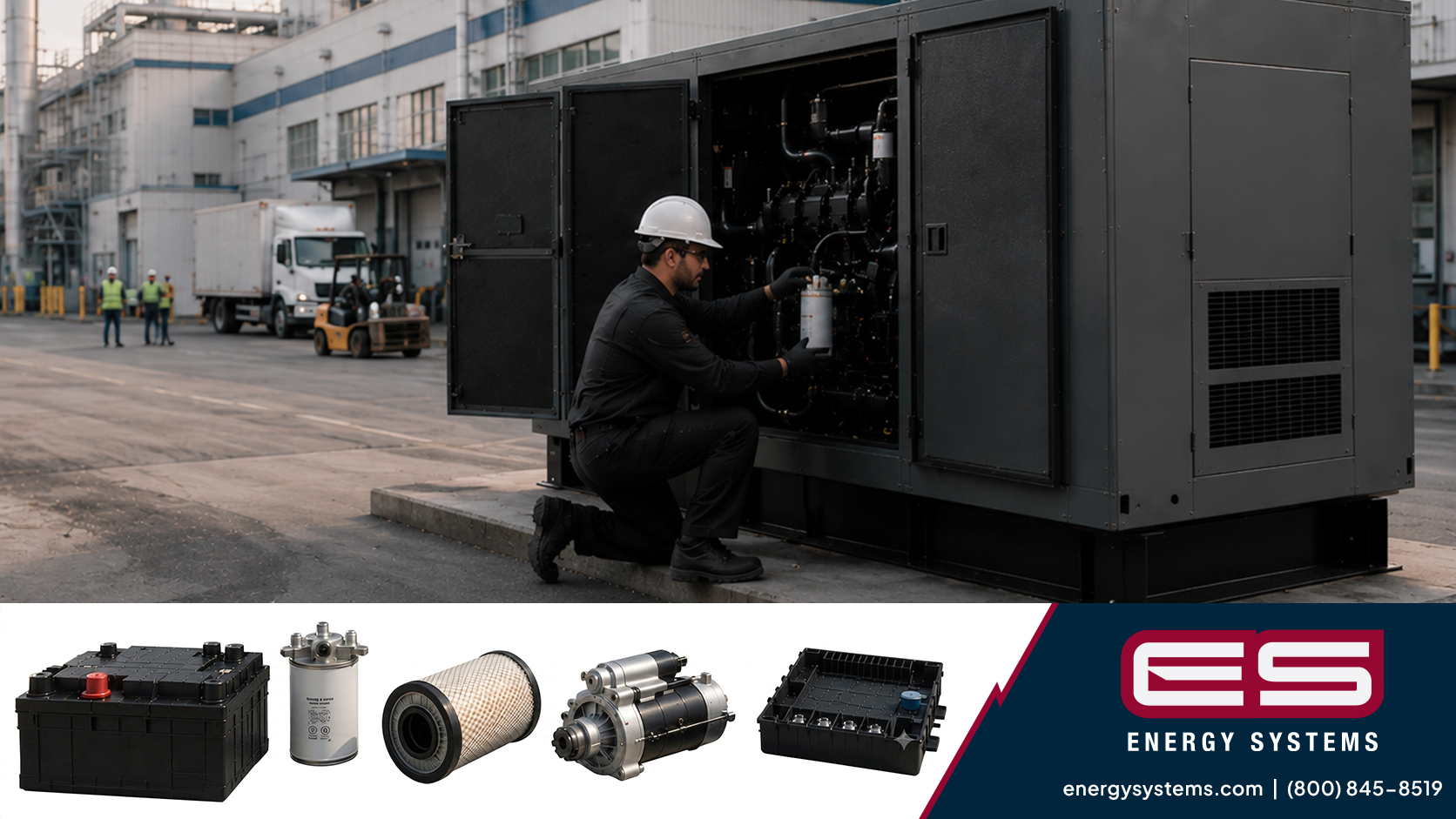
1. Battery
Why it fails:
Battery failure is the single most common cause of generator failure, especially in standby units. Long idle periods, corroded terminals, failed chargers, and sulfation lead to weak or dead batteries.
Replacement considerations:
Battery replacement involves verifying proper voltage, replacing corroded cables if needed, and confirming the battery charger is functioning correctly. Batteries are considered routine wear items and should be replaced on a scheduled cycle—not only after failure.
2. Fuel Filters and Fuel System Components
Why they fail:
Stale fuel, water contamination, and microbial growth clog fuel filters and strain fuel pumps. This is especially common in diesel generators that sit unused for long periods.
Replacement considerations:
Fuel filters are typically replaced rather than cleaned. In some cases, fuel lines or pumps may also require service if contamination has progressed. Addressing the root cause—fuel quality—is critical to prevent repeat failures.
3. Air Filters
Why they fail:
Dust, debris, and restricted airflow cause poor combustion, reduced output, and overheating. Rental generators and construction-site units are particularly vulnerable.
Replacement considerations:
Air filters are simple consumables and should be replaced during routine maintenance or whenever restriction is detected. Operating with clogged filters accelerates engine wear.
4. Starter Motor and Starter Components
Why they fail:
Starter motors and solenoids wear over time, often due to frequent start cycles, electrical issues, or weak batteries. A clicking noise or no-start condition is a common symptom.
Replacement considerations:
Starter replacement requires electrical isolation and verification that the failure is not battery-related. On larger generators, this work is typically performed by qualified technicians.
5. Voltage Regulator (AVR)
Why it fails:
Voltage regulators control electrical output. Heat, vibration, and aging components can cause instability, flickering power, or shutdowns. AVR issues are commonly reported on older generators.
Replacement considerations:
Regulator replacement involves resetting and testing output voltage to protect connected equipment. Improper replacement can result in damaged loads.
6. Cooling System Components (Hoses, Thermostats, Radiator)
Why they fail:
Coolant leaks, degraded hoses, or failed thermostats lead to overheating and automatic shutdowns. These issues often develop slowly and go unnoticed without inspections.
Replacement considerations:
Cooling components are replaced in conjunction with coolant system testing and leak inspection. Overheating damage can escalate quickly if not addressed.
When to Replace vs. When to Call a Professional
Some generator parts—like filters and batteries—are routine maintenance items. Others, especially electrical and engine components, should be serviced by trained technicians to ensure safety, code compliance, and equipment protection.
Preventing Generator Part Failures
Most generator failures are preventable through:
- Regular testing and exercise
- Scheduled battery replacement
- Fuel quality monitoring
- Preventive maintenance inspections
Planned maintenance costs far less than unplanned downtime.
Why Energy Systems?
Energy Systems supports commercial and industrial generators irrespective of make or model. We help with replacement parts, service expertise, and maintenance programs designed to reduce failures and extend equipment life.
Contact Energy Systems to schedule preventive maintenance or discuss generator repair and parts support.