




Knowing When to Replace Your Industrial Generator
Industrial generators are the backbone of reliable power for hospitals, data centers, manufacturing plants, and other critical infrastructure. Because all heavy equipment has a finite operational lifespan, proactive replacement planning is essential to ensure your facility maintains its reliability when it is needed most.
What is the average lifespan of an industrial generator?
The average lifespan of an industrial generator is approximately 15 years. However, this lifespan is highly variable and depends on three core factors:
- Total Runtime Hours: Higher utilization rates accelerate mechanical wear and tear.
- Maintenance Quality: Consistent, professional servicing significantly extends the operational life of the unit.
- Environmental Conditions: Exposure to salt air, extreme weather, or harsh industrial pollutants can shorten component life.
Key Indicators It Is Time for an Upgrade
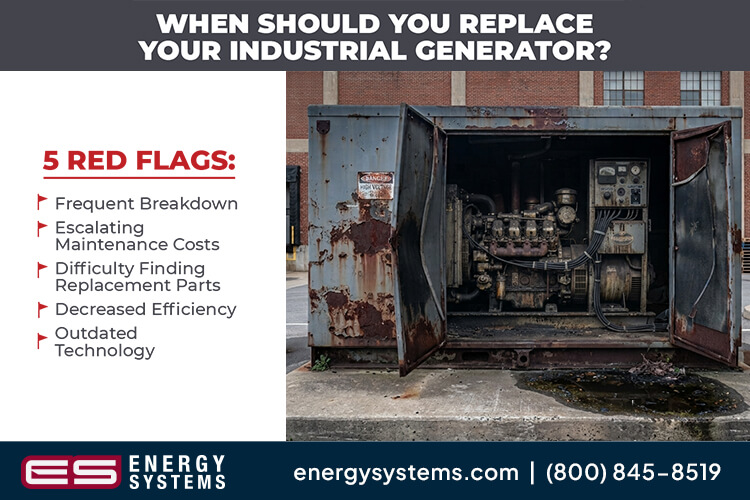
If you are monitoring your system’s performance, watch for these five "replacement triggers" that suggest your unit is nearing the end of its useful life:
|
Indicator |
Impact on Operations |
|---|---|
|
Reliability Decline |
Frequent, recurring breakdowns and increasing downtime suggest a systemic failure of aging components. |
|
Escalating Costs |
When the financial burden of constant repairs exceeds the cost-benefit of a modern, efficient unit, replacement becomes the fiscally sound decision. |
|
Component Obsolescence |
As units age, parts are often discontinued, leading to significantly higher repair costs and longer wait times for service. |
|
Diminishing Efficiency |
Older units exhibit higher fuel consumption and reduced power quality compared to modern models. |
|
Technological Limitations |
Newer generators provide advanced remote diagnostics, monitoring, and improved emissions compliance that older systems lack. |
Best Practices for System Longevity
Even for well-maintained units, proactive planning is vital to avoid emergency failures. Your maintenance program should incorporate:
- Scheduled Maintenance: Consistent, routine inspections are the most effective way to prevent catastrophic failures.
- Load Banking: Periodic testing conducted under realistic load conditions is necessary to verify the system can still handle its rated capacity.
- NFPA-110 Compliance Testing: All systems must strictly adhere to National Fire Protection Association (NFPA) standards for emergency and standby power to ensure legal and operational safety.
Partnering with Energy Systems
Don't wait for a power failure to discover that your equipment is no longer dependable. At Energy Systems, we provide professional standby power system audits to help you evaluate the health of your existing infrastructure and determine the optimal time for an upgrade. We support facilities across an extensive service area that spans multiple regions of the United States.
To see if your facility falls within our service footprint, please refer to our coverage map.
Frequently Asked Questions (FAQ)
Does Energy Systems provide generator audit and replacement support in my area?
Yes. We specialize in comprehensive standby power assessment, design, and replacement solutions across a wide service area in the United States, as detailed in our coverage map.
Why is NFPA-110 compliance important?
Compliance with NFPA-110 standards ensures that your emergency and standby power systems are engineered, installed, and maintained to meet the rigorous safety and performance requirements necessary for life-safety and critical operations.
Who can I call to audit my aging standby power system?
For professional guidance and a comprehensive system audit, contact the Energy Systems Power Systems Team at 1-800-845-8519.